Skip to content

The Road to the World Cup 2026 Quarterfinal Fixture
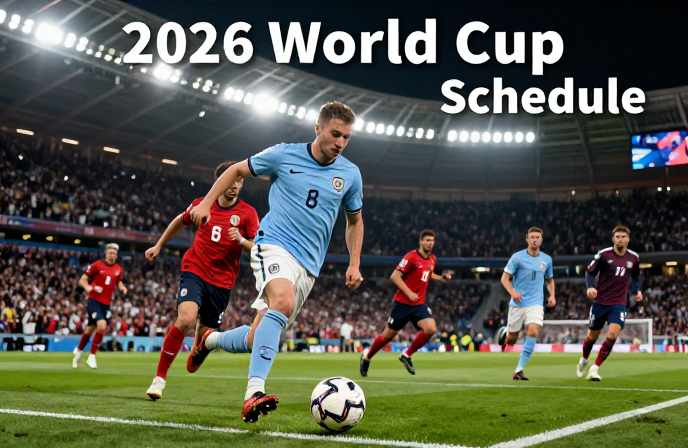
The FIFA World Cup 2026 is shaping up to be a momentous event, co-hosted across North America. Football fans worldwide are already buzzing with anticipation, eager to witness the expanded tournament format and the thrilling matches it promises. One stage of the tournament that always generates enormous interest is the quarterfinal, where the stakes are incredibly high, and the competition fierce. Predicting the world cup 2026 quarterfinal fixture is a popular pastime, and while it’s impossible to know for sure, we can analyze potential scenarios and consider the teams most likely to reach this crucial stage.
Expanded Format, More Possibilities
With the expansion of the World Cup to 48 teams, the path to the quarterfinals will be more complex than ever before. More teams will have the opportunity to progress through the group stage and knockout rounds, creating a greater degree of unpredictability. This also means that more nations have a realistic chance of making a deep run into the tournament, potentially leading to some surprising world cup 2026 quarterfinal fixture matchups.
Key Contenders for a Quarterfinal Spot
While upsets are always possible, several teams are consistently considered strong contenders for a place in the world cup 2026 quarterfinal fixture. These include traditional powerhouses such as Brazil, Argentina, Germany, France, and Spain. Their established track records, talented squads, and experience in major tournaments make them perennial favorites. However, the landscape of international football is constantly evolving, and other nations are rapidly closing the gap.
England, with their recent successes in major tournaments, will also be a team to watch, along with the Netherlands, Portugal, and Belgium. Furthermore, keep an eye on emerging footballing nations from Africa, Asia, and North America, who could surprise many with their performances. The USA, as one of the co-hosts, will be particularly motivated to make a strong showing and potentially reach the world cup 2026 quarterfinal fixture.
Potential Matchups and Rivalries
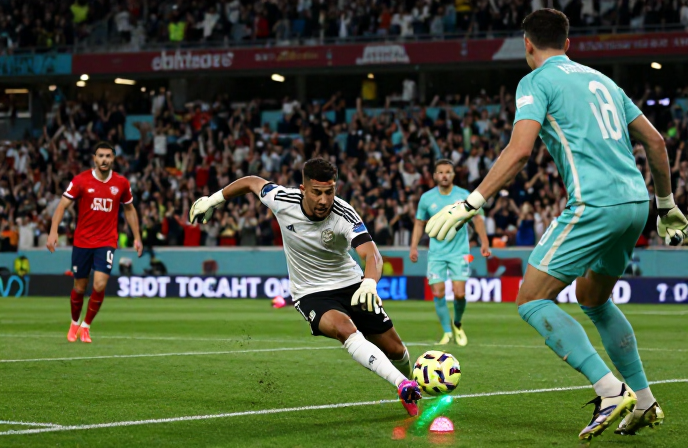
Imagining the possible world cup 2026 quarterfinal fixture pairings is an exciting exercise. Classic rivalries could be renewed, or new ones forged. A clash between Brazil and Argentina would undoubtedly be a spectacle, as would a meeting between Germany and England. These kinds of high-stakes encounters are what make the World Cup so captivating.
Beyond the traditional powerhouses, a quarterfinal featuring two emerging nations would also be incredibly intriguing. It would represent a significant step forward for the development of football in those countries and would provide a platform for their players to showcase their talent on the world stage. The possibilities are endless, and that’s what makes predicting the world cup 2026 quarterfinal fixture so much fun.
Factors Influencing the Quarterfinalists
Several factors will influence which teams ultimately reach the world cup 2026 quarterfinal fixture. These include:
- Team Form: A team’s form leading up to and during the tournament is crucial. Momentum can be a powerful force in football.
- Key Injuries: Injuries to key players can significantly impact a team’s chances. Having depth in the squad is essential.
- Tactical Flexibility: Teams that can adapt their tactics to different opponents and situations will have an advantage.
- Luck: As in any sport, luck plays a role. Favourable refereeing decisions and avoiding injuries can be decisive.
- Group Stage Performance: A strong showing in the group stage can build confidence and momentum.
The Importance of Squad Depth
With the expanded format and the demanding schedule, squad depth will be more important than ever at the 2026 World Cup. Teams will need to have quality players in every position to cope with injuries, suspensions, and fatigue. The ability to rotate players without significantly weakening the team will be a key asset. Teams that have invested in developing a strong squad will be better positioned to make a deep run and potentially reach the world cup 2026 quarterfinal fixture.
Home Advantage for North American Teams
The fact that the 2026 World Cup is being co-hosted by the USA, Canada, and Mexico gives these teams a significant advantage. Playing in front of home crowds can provide a massive boost in morale and performance. The familiarity with the climate, conditions, and culture can also be beneficial. It’s reasonable to expect that at least one, if not more, of these North American teams will make a serious challenge to reach the world cup 2026 quarterfinal fixture. The support of the home fans could be a decisive factor.
The Knockout Stage Draw
The draw for the knockout stage will play a significant role in determining the path to the world cup 2026 quarterfinal fixture. A favourable draw, avoiding the strongest teams in the earlier rounds, can make a big difference. Conversely, a difficult draw can make it much harder to progress. Teams will be hoping for a manageable path to the quarterfinals.
Analyzing Qualifying Results
The qualifying results from different confederations can provide insights into the relative strength of different teams and regions. Teams that have dominated their qualifying groups are likely to be strong contenders at the World Cup. Conversely, teams that have struggled to qualify may find it difficult to compete against the best teams in the world. Analysing the qualifying results can help to identify potential dark horses and predict which teams are most likely to reach the world cup 2026 quarterfinal fixture. Keep up with world cup headline news to stay informed on qualifying results.
The Role of Tactics and Strategy
In modern football, tactics and strategy are more important than ever. Teams that are well-organised defensively, creative in attack, and adaptable to different situations will have a significant advantage. The coaches who can devise the best game plans and make the right substitutions at the right time will be crucial to their team’s success. Expect to see innovative tactical approaches as teams battle for a place in the world cup 2026 quarterfinal fixture.
Predictions and Speculation
While it’s impossible to predict the future with certainty, it’s fun to speculate about the potential world cup 2026 quarterfinal fixture. Based on current form, squad strength, and historical performance, some possible scenarios could include:
- Brazil vs. England
- France vs. Argentina
- Germany vs. Spain
- Portugal vs. Netherlands
Of course, these are just hypothetical matchups, and the actual world cup 2026 quarterfinal fixture could be very different. The beauty of the World Cup is that anything can happen.
Beyond the Big Names
Don’t discount the possibility of a less-fancied nation making a surprise run. Teams from Asia, Africa, and North America are constantly improving, and they could spring a few surprises. A team like Senegal, Japan, or the USA could potentially upset some of the established powerhouses and reach the world cup 2026 quarterfinal fixture. This unpredictability is part of what makes the World Cup so exciting.
The Excitement Builds
As the World Cup 2026 draws closer, the excitement will continue to build. Fans around the world will be eagerly anticipating the tournament and speculating about which teams will make it to the latter stages. The world cup 2026 quarterfinal fixture will be a key milestone, and the matches at this stage are sure to be filled with drama, excitement, and unforgettable moments.
FAQ
When and where will the World Cup 2026 be held?
The FIFA World Cup 2026 will be co-hosted by the United States, Canada, and Mexico.
How many teams will participate in the World Cup 2026?
The World Cup 2026 will feature an expanded format with 48 teams.
What are some of the potential matchups for the World Cup 2026 quarterfinal fixture?
Predicting the exact matchups is impossible, but potential scenarios could include clashes between traditional powerhouses like Brazil, Argentina, Germany, France, Spain, and England, as well as emerging nations from Asia, Africa, and North America.